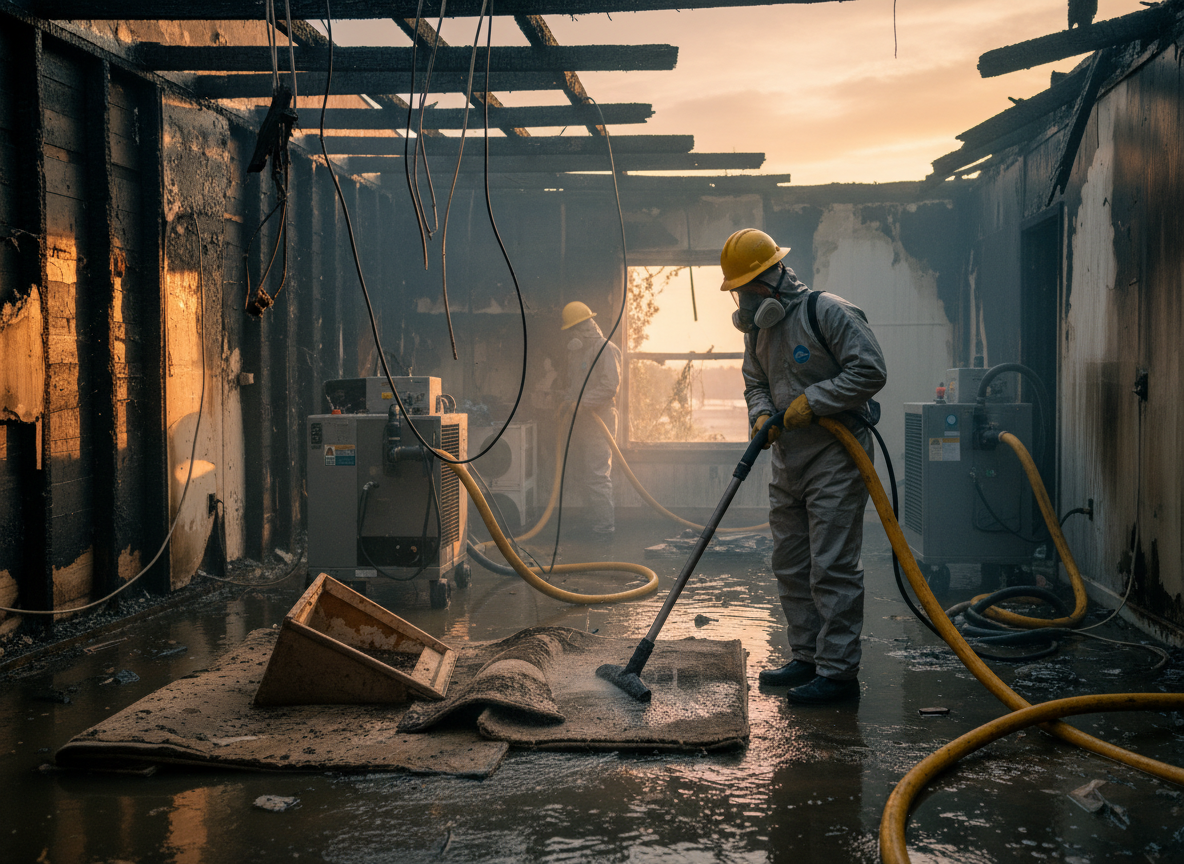
Chesapeake's humid subtropical summers turn water from fire hoses into a rapid mold risk inside homes in Great Bridge and South Norfolk. Older brick and frame houses common in those neighborhoods hold moisture in wall cavities and under floors longer than newer builds, so extraction must reach behind baseboards and into subfloors before humidity pushes growth past the 48-hour window. Crews check for hidden pockets around plumbing chases and attic insulation that absorb smoke residue and then re-release it when temperatures climb.
Western Branch and Deep Creek properties sit near the Dismal Swamp Canal and tidal creeks, so groundwater tables stay high. When fire suppression water mixes with that existing moisture, it travels farther under slabs and into crawl spaces. Restoration teams use moisture meters on concrete and joists rather than relying on surface readings alone, because trapped water here can migrate into neighboring rooms days after the initial event.
Virginia Beach and Norfolk traffic patterns affect response times when equipment must cross the bridges during peak hours. Local crews stage dehumidifiers and air movers in Greenbrier homes ahead of storms that often coincide with lightning-related fires, cutting the window for secondary damage. Every job includes clearing soot from HVAC returns so residue does not circulate through the ductwork once power is restored.
Technician insight
In Chesapeake the thing that catches most people out with Fire & Water Damage Restoration is how fast humidity in the summer turns suppression water into hidden mold inside the plaster walls and under the pine floors of pre-1980 homes in South Norfolk and Great Bridge; if crews do not pull baseboards and check joists the first day, the job doubles.
Western Branch Home After Kitchen Fire
Firefighters used several hundred gallons of water on a kitchen fire in a 1970s Western Branch split-level. Water migrated under the slab into the adjacent family room. Extraction reached the subfloor and joists; drying equipment ran for five days until meters read dry. No mold developed and the family returned without odor complaints.
Fire & Water Damage Restoration Services We Offer
✓Post-Fire Water Extraction
Removes standing water and suppression runoff from homes in Great Bridge and Western Branch before humidity drives mold in older framing.
✓Soot and Smoke Residue Cleanup
Cleans porous surfaces and HVAC components in South Norfolk brick homes where smoke particles embed in plaster and ductwork.
✓Structural Drying After Fire
Dries wall cavities, subfloors and crawl spaces in Deep Creek properties using meters to track moisture levels in high water-table soil.
✓Odor Removal and Deodorization
Neutralizes smoke smells trapped in insulation and carpet padding common in Greenbrier homes built before updated ventilation codes.
✓Content Cleaning and Pack-Out
Removes, cleans and stores salvageable belongings from fire and water events in Chesapeake City neighborhoods to prevent cross-contamination.
Fire & Water Damage Restoration Cost in Chesapeake, VA
| Service | Typical Range | What Affects It |
|---|---|---|
| Initial Assessment And Moisture Mapping | $250–$450 | Larger homes in Great Bridge or multi-story properties increase time required. |
| Water Extraction | $800–$2,200 | Higher when water reaches crawl spaces common near the Dismal Swamp Canal. |
| Equipment Drying (Per Day) | $150–$350 | Extends in humid summer months typical of Chesapeake City. |
| Soot Cleanup | $600–$1,800 | Varies with HVAC involvement and age of home in South Norfolk. |
Ranges are typical for Chesapeake, VA and confirmed with an exact written quote before any work starts.
How it works
- 1
On-Site Assessment
Technicians inspect affected rooms in the specific Chesapeake neighborhood, map moisture migration through older construction, and note smoke paths.
- 2
Water Removal
Extract standing water and pull moisture from cavities using pumps and wands suited to local slab and crawl-space layouts.
- 3
Drying And Monitoring
Place equipment and check readings daily, adjusting for summer humidity levels that affect drying times in Western Branch and Deep Creek homes.
- 4
Final Restoration
Replace damaged materials and verify no residual odors or moisture remain before returning contents.
Pricing
Pricing depends on affected square footage, number of rooms, and whether older construction requires extra demolition for hidden moisture.