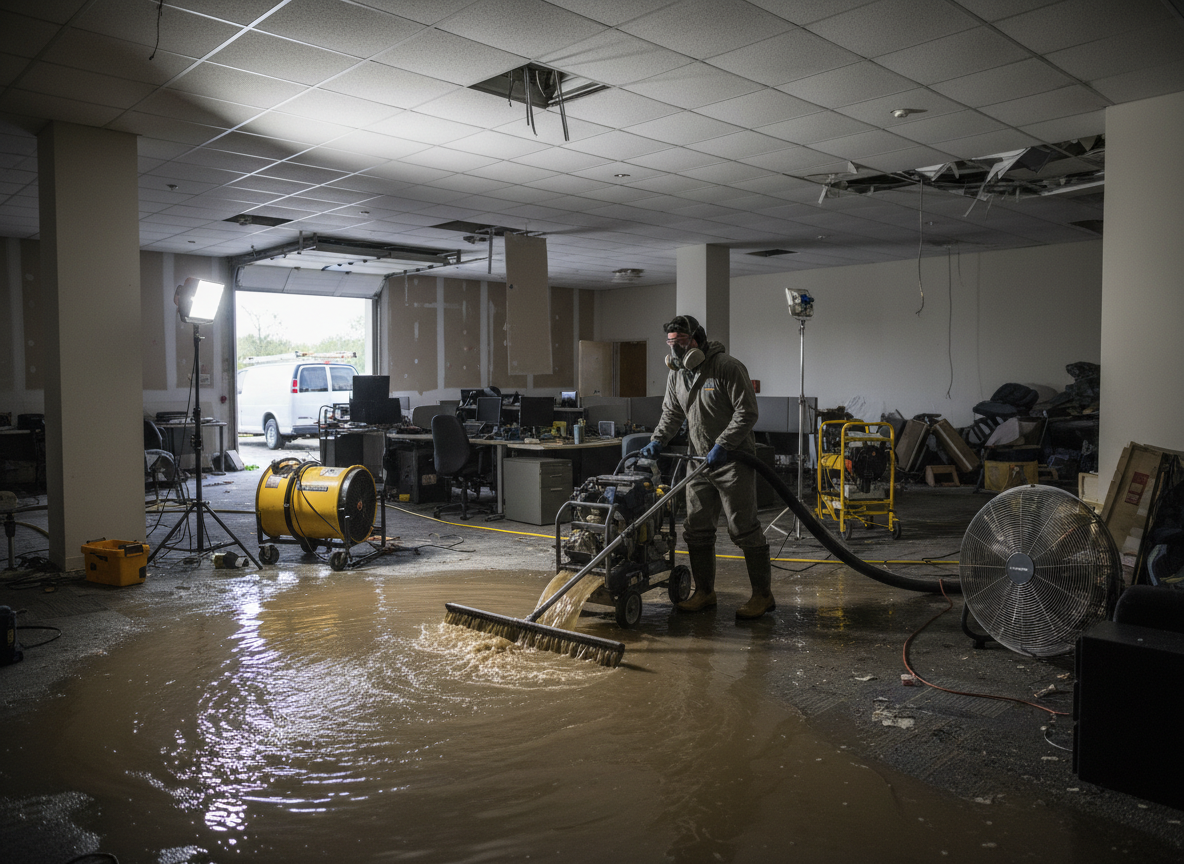
Portsmouth sits right along the Elizabeth River with direct access from Effingham Street and High Street corridors. Older brick and frame homes in Olde Towne often feature crawl spaces and basements that pull moisture from the river during high tide or heavy rain. Our crews reach these blocks quickly from Chesapeake routes, extracting water before it migrates into plaster walls or oak floors common in the historic district.
Hot humid summers here accelerate mold growth once water enters a structure. We focus on drying the dense lot layouts and narrow alleys behind many Portsmouth homes where airflow is limited. Work in the area also accounts for the mix of 1920s-1950s housing stock near the naval hospital and the festival marketplace, where commercial spaces share walls with residential units.
Storm surges from the river and runoff along streets like Crawford Parkway create repeat saturation in lower lots. We map these patterns for each block so extraction and dehumidification target the actual moisture paths rather than guessing.
Around Portsmouth
We regularly work near:
- 📍Olde Towne Portsmouth
- 📍High Street
- 📍Effingham Street
- 📍Children's Museum of Virginia
- 📍Crawford Parkway
Water Damage Restoration in Portsmouth — Local Notes
- •Historic Olde Towne homes frequently have stone foundations and limited access points that require smaller equipment to reach water trapped under floorboards.
- •Proximity to the Elizabeth River means tidal influence can push water back into crawl spaces hours after the rain stops, changing drying timelines.
- •Narrow side streets and shared driveways in blocks near High Street limit truck placement, so we stage equipment on foot for many jobs.
- •Summer humidity levels regularly push indoor moisture readings above 70 percent in unventilated Portsmouth basements, requiring extended dehumidification after initial extraction.